Magnetic Wireless Charging: A Wholesale Buyer's Verification Guide
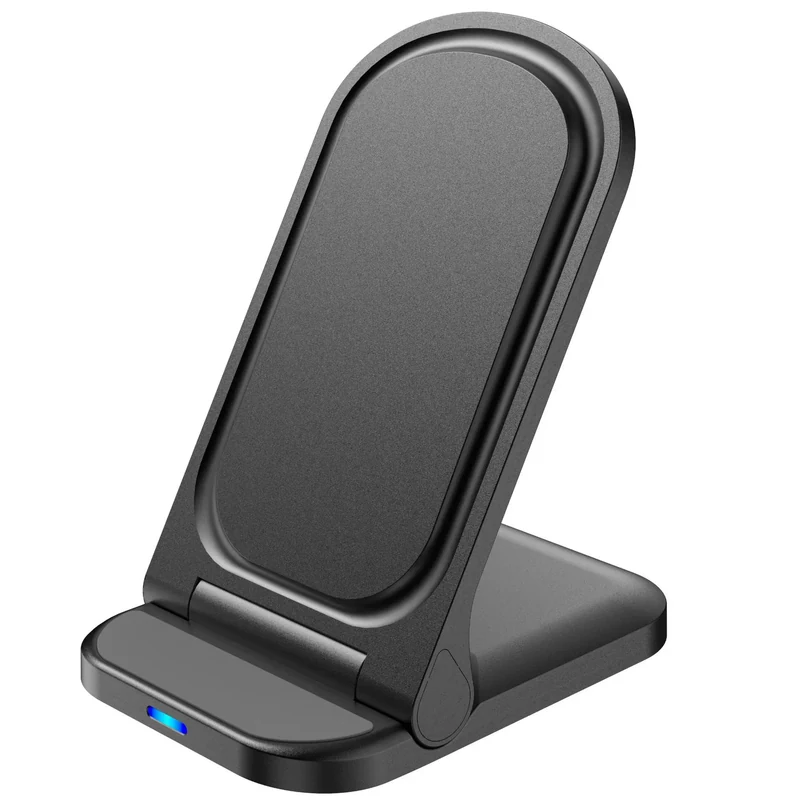
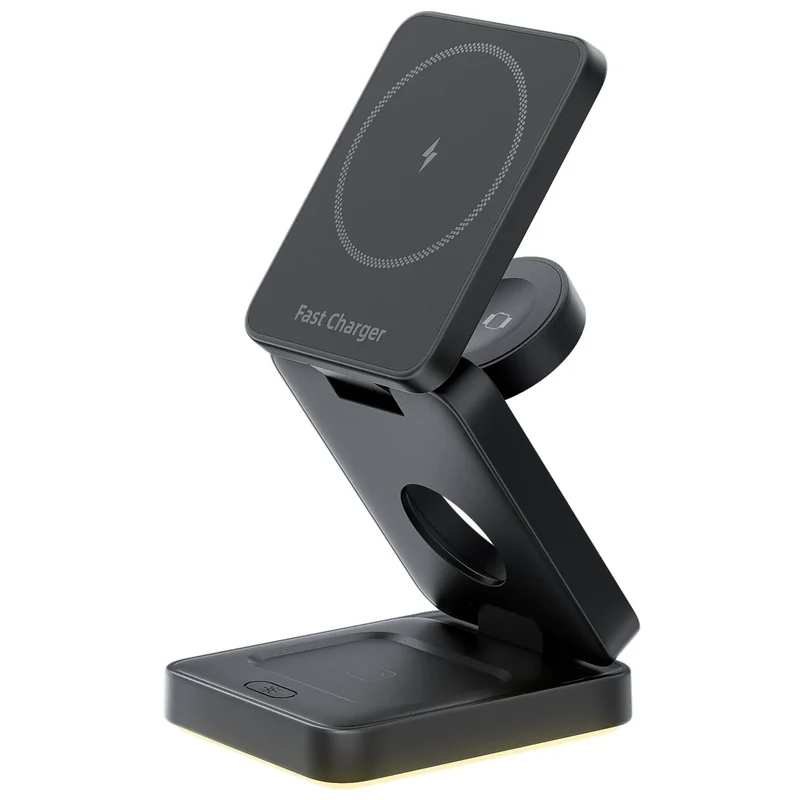
A magnetic wireless charger is three products in one: a magnet array that holds the phone, a coil pair that transfers energy, and a thermal design that decides whether the transfer rate holds for more than a few minutes. The wattage printed on the box is a ceiling reached only with a compatible phone, a thin or magnetic-compatible case, correct alignment and a power supply that can feed the charger. To evaluate before ordering, test alignment strength, charging rate through the cases your customers actually use, and surface temperature after twenty minutes at full rate.
Key takeaways
- 15W is a ceiling, not a typical rate: it depends on the phone, the case and the power supply.
- Magnet strength and coil alignment matter more than extra wattage for perceived quality.
- Case thickness is the most common cause of slow charging in the field.
- Heat is the limiting factor in car mounts, where sunlight adds to coil losses.
- Compatibility claims should name the standard, not just the brand.
What "15W magnetic" actually requires
Wireless charging power is negotiated, not delivered on demand. The charger advertises a power profile; the phone accepts what it supports, subject to alignment and thermal limits.
Four conditions usually have to be satisfied for the highest rate:
- A phone that supports the highest profile — many devices cap below the charger's ceiling.
- Magnetic alignment — the coil centres must sit within a small offset, which is the entire reason a magnet array exists.
- Case compatibility — a thick, metal-backed or non-magnetic case breaks both alignment and efficiency.
- An adequate power supply — a charger fed by a 5V 2A adapter cannot deliver its rated output.
A product marketed at 15W that ships without a suitable adapter, and is tested through a 5mm leather case, will not deliver 15W. That is not fraud; it is an incomplete specification.
The magnet array is a mechanical specification
Buyers tend to evaluate magnets by feel. In production terms, the relevant parameters are:
| Parameter | Why it matters | What to check |
|---|---|---|
| Magnet grade and count | Holding force and consistency | Ask for grade and array layout, not just "strong magnets" |
| Ring geometry | Alignment with the phone's coil | Confirm the ring matches the standard you claim compatibility with |
| Adhesive and retention | Magnet separation over time | Check retention after a drop test |
| Shielding | Stray field and heat | Ask whether a ferrite shield is used |
| Surface finish | Grip and scratch risk | Silicone or soft-touch surfaces reduce phone slip |
A weak array is a return reason that shows up as "it keeps slipping" or "it stops charging when I move the phone". Neither sounds like a magnet problem in a support ticket, which is why it is worth testing deliberately.
The case problem, quantified in practice
Case thickness is the single largest field variable. Most wireless charging standards lose efficiency as distance between coils increases, and a magnetic array is designed to hold the phone at a specific distance.
Test with the cases your market actually uses:
- A thin silicone or TPU case, 1–2mm
- A magnetic-compatible case with its own magnet ring
- A thick protective case, 3mm or more
- A case with a metal plate or a card holder
If the charger fails on the third and fourth, the retail listing should say so. Customers who bought a "works through cases" product and found otherwise will return it, and the seller pays the freight.
Heat is the hidden limiter
Wireless charging is less efficient than a cable, and the losses appear as heat in the charger, the phone, or both. Two consequences follow:
- Rate reduction. Phones reduce charging power when they get warm, so a charger that runs hot will not sustain its peak rate.
- Battery wear. Sustained heat is the least desirable condition for a lithium cell, and buyers increasingly know it.
Measure surface temperature after twenty minutes at the highest rate the phone accepts. Then repeat inside a car on a sunny dashboard, which is where car mounts live. A mount that performs acceptably on a desk can throttle continuously in a vehicle, and the resulting review says the product "stops charging".
Car mounts are a different product from desk pads
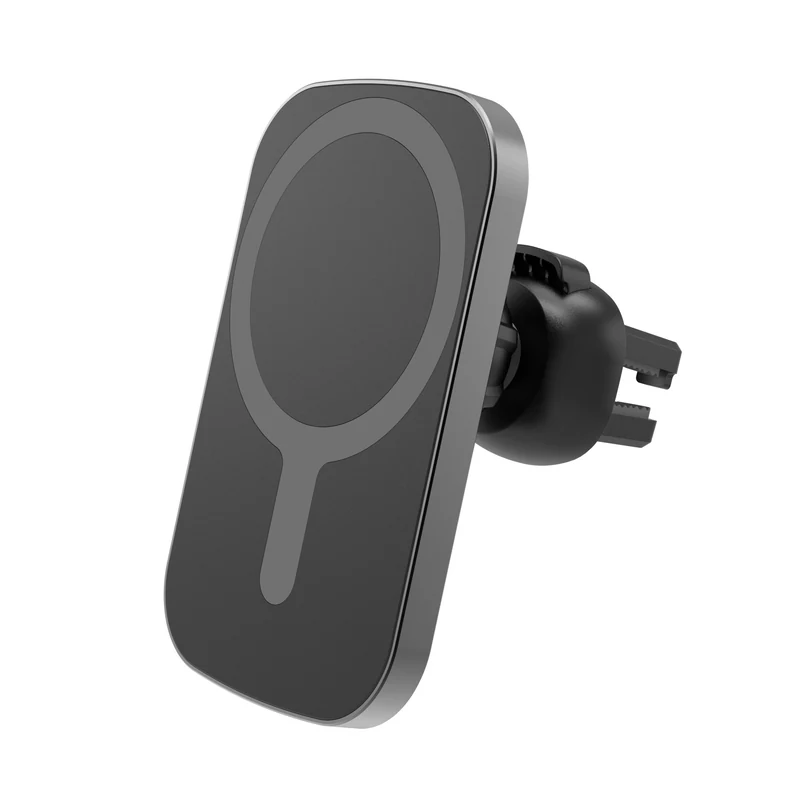
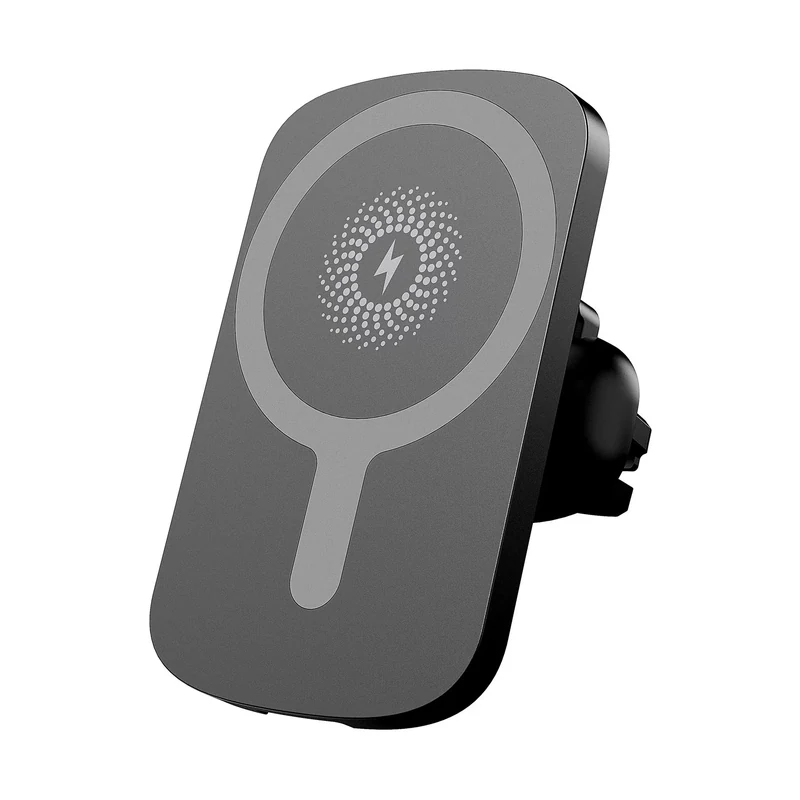
A car mount inherits three conditions a desk pad never sees: direct sunlight, vibration, and a power feed from a 12V socket that may not deliver a clean, adequate supply.
| Condition | Effect | Verification |
|---|---|---|
| Sunlight on the dashboard | Raises surface temperature, triggers throttling | Test in direct sun, not in a garage |
| Vibration | Magnet retention, vent-clip fatigue | Shake and road-simulation test |
| Vehicle supply | Undervoltage causes dropouts | Test with a typical 12V-to-USB adapter |
| Air-vent mounting | Blocks airflow, adds heat | Check whether the mount obstructs the vent |
A magnetic car mount is therefore a specification with its own test plan, not a desk charger with a clip attached.
Compatibility claims that survive scrutiny
Compatibility language on packaging is where returns are created. Practical rules:
- Name the standard the product implements, and the power profile it can deliver within that standard.
- State the case conditions under which the rated power is achieved.
- State whether an adapter is included, and what input it requires.
- Avoid implying universal compatibility with a brand name alone; a magnetic array can align with a phone and still fail a proprietary fast-charge negotiation.
A buyer comparing two suppliers should compare these four lines, not the wattage number.
Sample tests worth running
- Alignment. Place the phone and check that charging starts without searching for a spot; repeat with a compatible case.
- Rate over time. Record the rate at minute one, minute ten and minute twenty. A rate that halves is a thermal design problem.
- Temperature. Measure the charger surface and the phone back at the end of the twenty-minute run.
- Magnet retention. Hold the phone by the charger and shake moderately; the phone should not separate.
- Power supply sensitivity. Repeat with a lower-rated adapter to see how the product behaves in the field.
This guide describes how magnetic wireless chargers behave and which specification items determine real-world performance. It does not publish test results for specific SKUs, certification conclusions or market data. Power profiles, case effects and thermal behaviour vary by model and by phone — verify on a physical sample with the phones and cases your market uses before committing volume.
Frequently asked questions
Why does my 15W charger charge more slowly than the number suggests?
Because 15W is a ceiling that requires a compatible phone, correct alignment, a thin or magnetic case and an adequate adapter. Most phones also reduce power as they warm up. Measure the rate at minute one and minute twenty; if it falls sharply, the constraint is thermal rather than the charger's rating.
Do magnetic chargers work through thick cases?
Often at a reduced rate, sometimes not at all. Case thickness increases the distance between coils, which lowers efficiency and can break alignment. Metal plates and card holders usually stop wireless charging entirely. Test with the cases your market sells and state the limitation on the listing.
Is a magnetic car mount the same product as a desk charger?
No. The car mount adds sunlight, vibration and a vehicle power supply, all of which change thermal behaviour and reliability. A desk pad that performs well can throttle continuously on a dashboard. Treat car mounts as a separate specification with their own test plan.
What should the packaging say about compatibility?
The standard implemented, the power profile actually delivered, the case conditions required for that rate, and whether an adapter is included. Naming a phone brand alone is not a specification and tends to create returns when the device negotiates a lower rate.
How important is the magnet grade?
It determines holding force and consistency, which drive the "slipping" and "stops charging when moved" complaints. Ask for the array layout and grade rather than a strength adjective, and test retention after a drop rather than only out of the box.
Ready to shortlist suppliers?
Send your SKU list, target quantities and destination markets. We confirm current specifications, MOQ tiers, certification files and carton data before any order.