Private Label AI Smart Glasses: Build Your Own AI Eyewear Brand in 2027
Private label AI glasses are the shortest route to an AI eyewear brand in 2027: you put your brand on a proven platform instead of engineering hardware. Decide the product type first — audio, camera or translation glasses — verify camera, battery and storage against recorded specs, then plan logo placement on the temple arm, retail packaging and a small trial order before you scale.
Which type of AI glasses are you actually branding?
"AI smart glasses" is a retail phrase, not a product category. On a supplier catalogue it splits into three product types, and mixing their features in one listing is the fastest way to lose buyer trust. An audio-only model with no camera is not a smaller camera glasses; it is a different product with a different buyer.
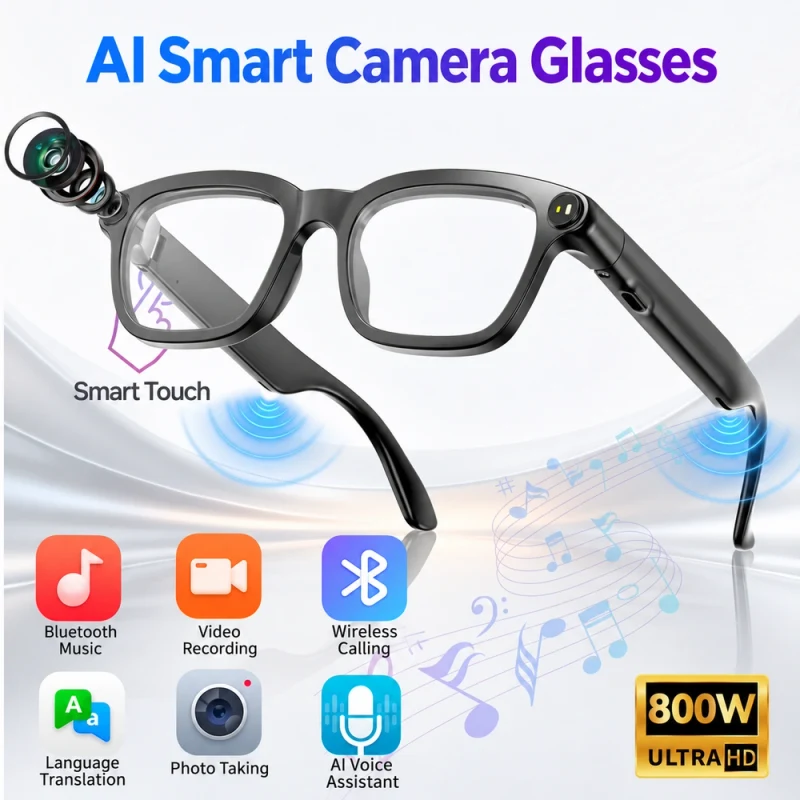
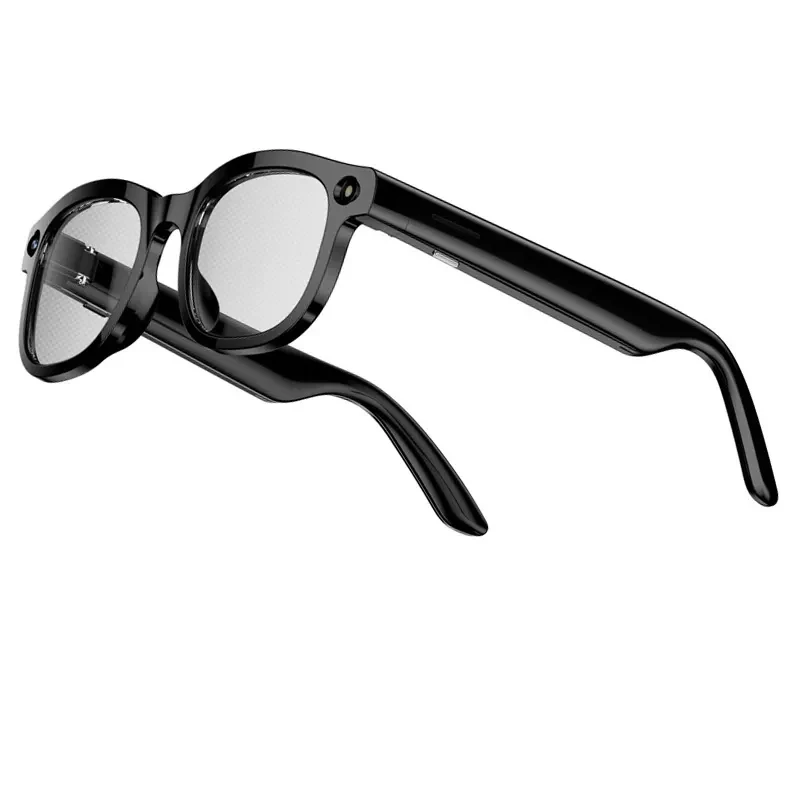
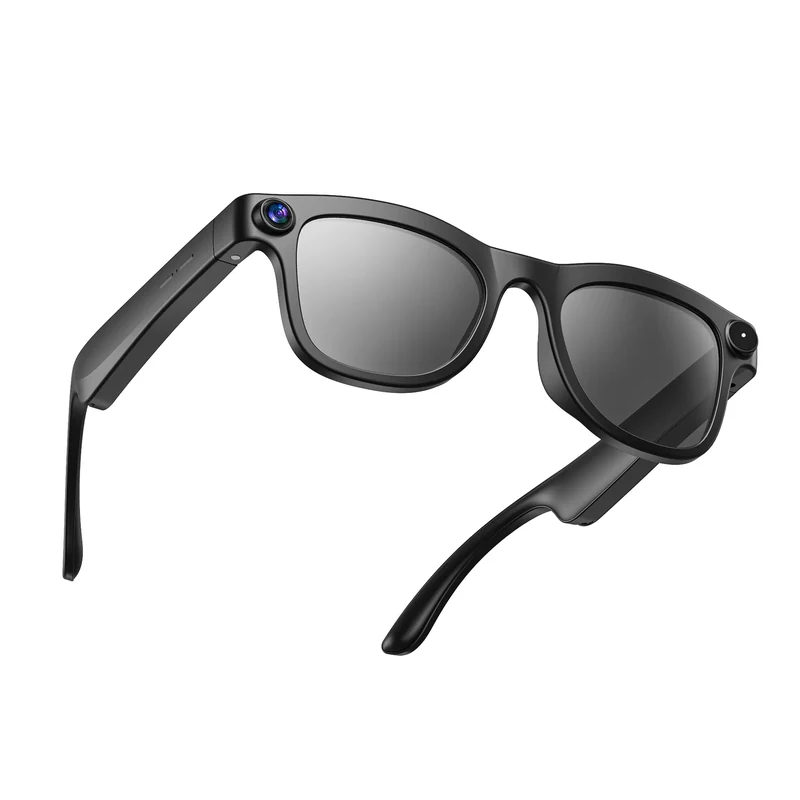
The SZJOYTech smart glasses family separates them cleanly. Camera models record what the wearer sees and handle Bluetooth calling — the AI smart glasses with built-in camera records an 8 MP camera, a 290 mAh battery and touch-plus-button operation. Audio models are open-ear wearables for music, calls and voice control, with no camera at all. One listed audio design is IPX4-rated for splashes, built on a PC and ABS frame with binaural stereo output. Translation smart glasses add cloud AI translation on top of audio, with some variants supporting a dozen interface languages.
Pick one type to launch, not three
A first-time brand almost always performs better with a single product type done properly. Three SKUs that share nothing but a frame shape read as a trader's assortment; one well-specified product with a real brand story reads as a company. You can extend into adjacent types after the first SKU has reviews and reorder data.
Key takeaways
- "AI smart glasses" splits into camera, audio and translation products — launch one type, not three.
- Verify camera, battery, storage and language support against recorded specs only.
- Logo work concentrates on the temple arm; packaging carries the rest of the brand.
- The family's MOQ of 50 pieces per model makes a one-SKU trial order affordable.
| Product type | Core function | Recorded spec anchors | Typical buyer |
|---|---|---|---|
| Camera glasses | Photo, video, Bluetooth calling | 8 MP camera, 290 mAh battery, touch and button control | Content creators, outdoor retail |
| Audio glasses | Open-ear music and calls, voice control | IPX4 water resistance, binaural stereo, Bluetooth 6.0 on one model | Commuters, sports channels |
| Translation glasses | Multi-language AI translation with cloud models | 2 GB internal storage on one model, cloud AI with OTA updates | Travel retail, trade and education |
The table uses only values recorded on the current product pages. When a supplier brief cannot point to a spec line, treat the claim as unverified and leave it out of your own listing.
What to verify on the specification sheet before you brand it
Private label means the hardware is fixed and the brand layer is yours. That makes the specification sheet the real contract. Three areas decide whether an AI eyewear brand survives its first season of returns.
Camera and battery on camera models
Camera resolution and battery capacity set buyer expectations more than any marketing copy. A listed camera model records 8 MP stills and a 290 mAh battery — quote exactly that, never round up. Battery figures on glasses are laboratory numbers; real runtime drops with audio playback, recording and standby drain combined. A brand that promises eight hours where the sheet records a shorter figure buys itself a chargeback problem, not loyalty. One listed camera model does record an 8-hour battery life figure, and another records 0-4 hours depending on the variant — the spread itself tells you the two are different products.
Storage, connectivity and language support
Internal storage decides how much the glasses hold without a phone. Recorded values range from 2 GB on the adaptive-fit translation smart glasses down to models with none at all — the audio-only designs. Connectivity splits between Bluetooth-only frames and models that add WiFi, and only the cloud-connected ones update their AI behaviour over the air. Language support matters most for translation products: one listed model records twelve interface languages from Thai and Korean to Spanish and Portuguese. Copy that list verbatim; do not add a language the sheet does not name.
The frame itself
Frame material is recorded per model — TR90 blended with PC on one, pure PC or ABS on others — and it drives weight, which buyers feel immediately: 42 g on one model against 140 g on another. Weight, hinge feel and nose-pad geometry are the physical brand. Order samples and wear them for a day before approving artwork.
How far customization goes on a proven platform
This is where an AI eyewear brand gets built without a factory. Because every listed model is processed as private-label OEM work, the brand layer is a defined scope, not a favour.
Logo application on AI glasses concentrates on the temple arm, where the flat surface accepts printing cleanly on TR90 and PC housings. Frame colour runs are possible on models that record colour options — one audio model lists black and white, another adds orange-red, cyan and blue. Packaging is the second canvas: a recorded camera-model package already includes the glasses, charging cable, pouch, manual and box, and every one of those surfaces can carry your artwork instead of a supplier's. The private label programme page breaks the artwork, packaging and manual process out step by step.
Three processing levels appear across the family, and knowing which one a model uses prevents most first-order misunderstandings. Standard private-label processing applies your brand to an existing platform. Customization from supplied artwork adapts an existing frame to your design files. Private-mold tooling, recorded for one audio model, opens deeper changes but belongs to a later order, not a first one.
MOQ, samples and the first order
The whole family carries an MOQ of 50 pieces per model, which makes a trial order arithmetic simple: one SKU, one colour, one packaging design. A 50-piece first order tests the logo placement, the retail box and the manual before you commit a seasonal budget. How a quote scales from that base is explained in the MOQ and tier pricing guide.
What a sample approval locks down
A signed-off sample fixes the golden reference: logo position and size, colour tone, packaging print quality and accessory set. Every later production run is checked against it, so changes requested after approval — a moved logo, a reordered manual, a different pouch — are a new approval cycle, not a tweak. Photograph the approved sample and keep the artwork files versioned.
Sequence the first order in four steps. Confirm the product type and model. Order samples and wear-test them. Approve artwork for the temple arm and packaging together, so the box matches the product. Then place the trial run and hold the shipping documents against the proforma invoice line by line. Buyers comparing suppliers before this stage can use the checklist in audio versus camera glasses to keep product types straight, and the launch roadmap in the earlier smart wearables brand guide covers the brand side in depth.
Frequently asked questions
Can I put my own logo on AI smart glasses without changing the hardware?
Yes. Every model in the family is processed as private-label OEM work, and the temple arm is the standard logo surface on TR90 and PC frames. Hardware stays as recorded; the brand layer is yours.
What MOQ applies to a first private label order?
The current smart glasses family records an MOQ of 50 pieces per model. Exact MOQ is confirmed per model and configuration on the written quotation.
How do I choose between camera glasses and audio glasses?
Match the product type to your channel, not to the trend cycle. Camera models serve content and outdoor buyers; audio models serve commuters and sports retail; translation models serve travel and trade. Never list one product with another type's features.
Which specs must appear exactly as recorded?
Camera resolution, battery capacity, internal storage, water resistance and language support. One listed model records an 8 MP camera and a 290 mAh battery; quote those numbers verbatim in your listing.
How long does a customized AI glasses order take?
Ready-stock lines typically ship about 7 days after payment confirmation, while customized production typically takes 15-30 days. Both figures are typical ranges, not guarantees, and are confirmed per order.
What should my first inquiry contain?
The model or product type, target quantity, destination market and packaging requirement. With those four facts a quotation can be prepared without a second round of questions.
Next step
Pick the product type, shortlist the model, and request samples before any artwork spend. Request a quote with the model, quantity, destination and packaging requirement, and the SZJOYTech team will confirm MOQ, logo options and the private label scope in writing.
Ready to shortlist suppliers?
Send your SKU list, target quantities and destination markets. We confirm current specifications, MOQ tiers, certification files and carton data before any order.