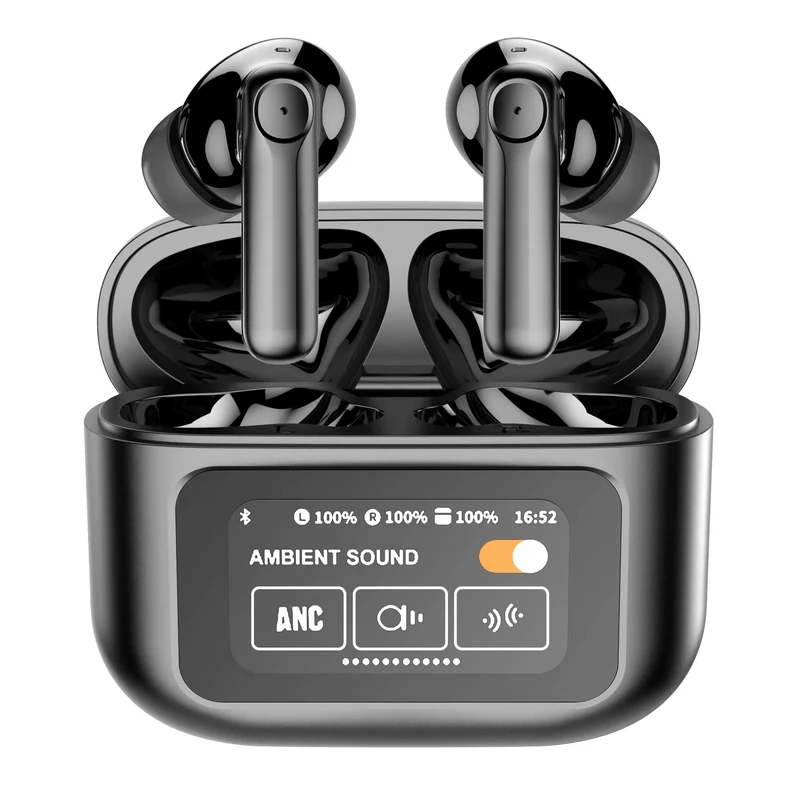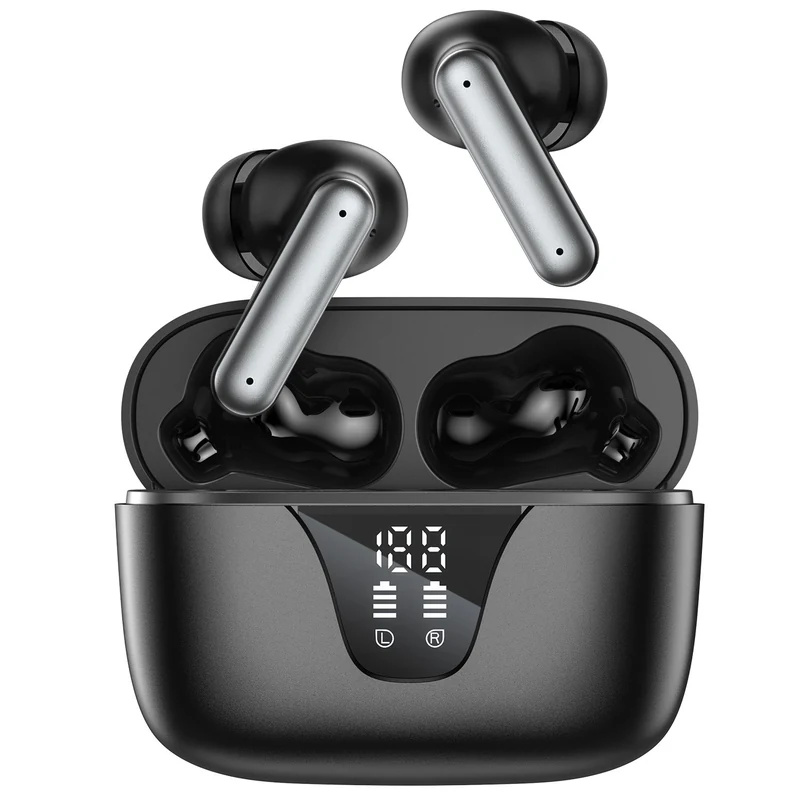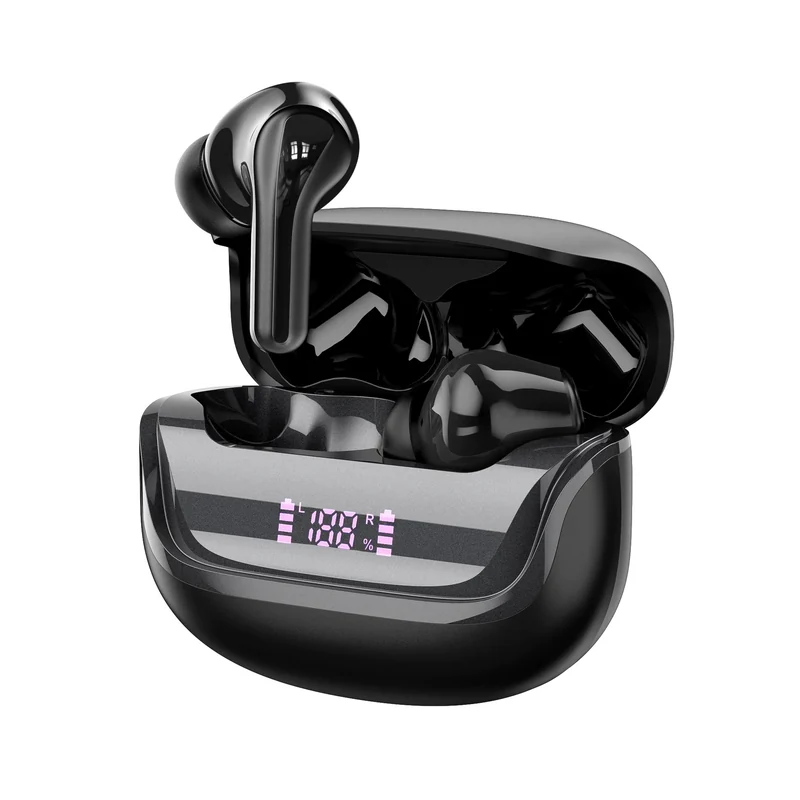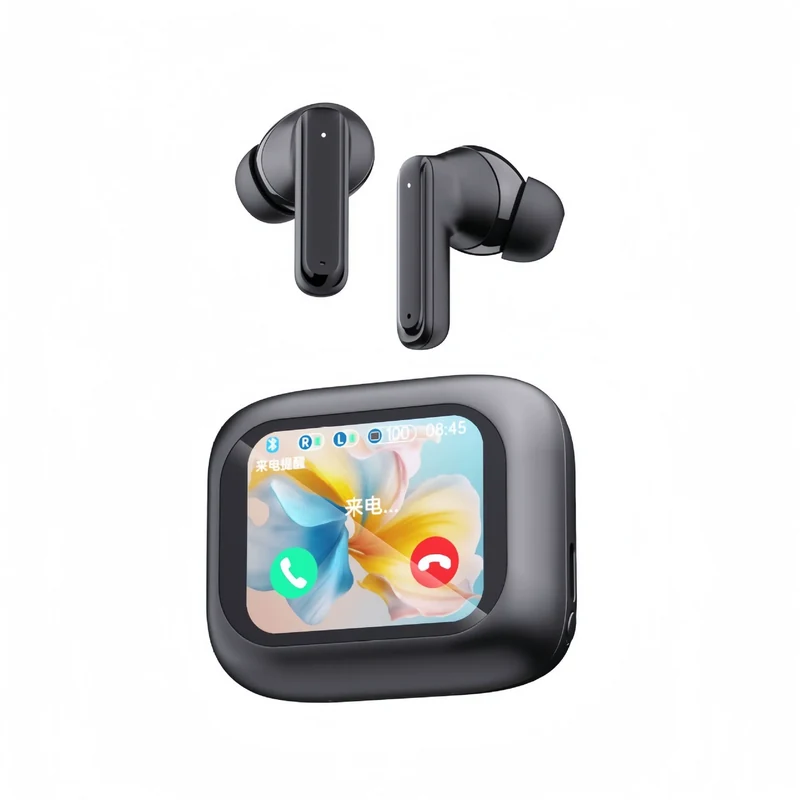
TWS Earbuds Wholesale Guide: ANC, Chipset and Battery Checks
Three specifications decide whether a TWS programme generates returns: the noise-cancellation architecture, the Bluetooth and codec support, and the battery figures for buds and case measured separately. ANC depth claims are usually quoted at a single low frequency and rarely describe performance across the range a customer hears; codec support depends on chipset licensing, not on the datasheet alone; and playtime figures assume a volume the customer will exceed. Verify all three on a sample, with conditions written down, before comparing prices.
Key takeaways
- ANC depth in decibels describes one frequency band, not the whole experience.
- Feedforward, feedback and hybrid architectures behave differently on wind and on voices.
- Codec support follows chipset licensing: a claimed codec may exist in hardware but not in the shipped firmware.
- Bud battery and case battery are separate figures; the case delivers fewer full charges than its capacity suggests.
- Latency claims only matter in modes your channel actually sells to.
Which ANC architecture fits your product?
Active noise cancellation works by sampling noise with a microphone and generating an inverse signal. Where the microphone sits determines what the system can cancel:
| Architecture | Microphone position | Strong at | Weak at |
|---|---|---|---|
| Feedforward | Outside the earbud | Steady low-frequency noise such as engines | Wind, sudden sounds |
| Feedback | Inside the ear canal side | Noise close to the ear, more consistent fit-to-fit | Higher frequencies, occlusion effects |
| Hybrid | Both | Broadest coverage, best compromise | Cost, tuning complexity |
| Adaptive hybrid | Both, with adjustment | Changes with fit and environment | Cost, and harder to verify |
A single "up to X dB" figure usually refers to low-frequency attenuation measured in a lab. It says nothing about how the earbuds handle wind on a bike, a train announcement, or an open-plan office. Those are the conditions customers describe in reviews.
Practical verification: test on a street with traffic, indoors with speech, and outdoors with wind. Ask which architecture is used and whether wind-noise reduction is a separate feature or part of the ANC claim.
How do Bluetooth version and codec licensing affect TWS earbuds?
The Bluetooth version on the box describes the radio and its feature set, not the sound. What matters for the customer is codec support, and codec support is constrained by licensing:
- SBC is mandatory in practice and always available.
- AAC is widely supported and usually available without additional licensing on the earbud side.
- Higher-bitrate codecs typically require chipset support and a licence. A product may claim support in marketing while the shipped firmware exposes only the basics.
- Low-latency modes are usually vendor-specific and work best with a device from the same ecosystem.
Ask for the codec list as implemented in the shipping firmware, and test with the phones your market uses. A codec table copied from the chipset datasheet is not a product specification.
Bluetooth version still matters for connection behaviour: newer versions commonly bring better multipoint handling and lower power for the same audio path. If multipoint — two devices connected at once — is a selling point, test the switch behaviour explicitly, because implementations vary in how gracefully they hand over a call.
How should bud and case battery figures be measured?
Earbud playtime and case capacity are different numbers, and buyers routinely conflate them.
| Figure | What it describes | How to verify |
|---|---|---|
| Bud playtime | Continuous audio on one charge, at a stated volume | Play at a realistic volume until shutdown |
| Case capacity | Energy stored in the case | Measured in mAh, not in "charges" |
| Full recharges | How many times the case refills the buds | Count them — conversion losses reduce this below the arithmetic |
| Charge time | Time from empty, for buds and for case | Measure with a known adapter |
Playtime claims assume a volume setting and a codec. At higher volume, or with ANC active, runtime falls — sometimes substantially, because the ANC circuitry draws continuously. Ask whether the quoted figure was measured with ANC on or off. That single question separates a usable specification from a marketing number.
What else affects the TWS return rate?
- Fit and tip selection. In-ear returns are dominated by fit. A range that ships only three tip sizes in one material will lose customers whose ears need another shape.
- Touch controls. Capacitive touch that triggers on hair or a hat is a common complaint. Test with a hood and with gloves if your market is outdoor-oriented.
- In-ear detection. A sensor that pauses audio when one bud is removed is expected at mid-market and above; its absence reads as a missing feature.
- Call quality. Microphone count and noise reduction for calls matter more than music specifications for business buyers.
- Charging connector. USB-C is expected; a case with a fragile port or a non-standard cable is a support cost.
How should two TWS quotations be compared?
Normalise before comparing price:
- ANC architecture and whether wind reduction is separate
- Codec list as shipped, not as designed
- Bud playtime with ANC on and off, at a stated volume
- Case capacity in mAh and measured full recharges
- Bluetooth version and multipoint behaviour
- Tip sizes and materials included
- IP rating and what it covers
- Charging case input and cable included
Two quotes that differ by a meaningful margin almost always differ on two or three of these lines. The question is which one you are giving up.
This guide describes how noise cancellation, codec support and battery specifications behave in practice, and how to verify them on a sample. It does not publish test results for specific SKUs, chipset names, supplier prices or market data. Codec availability and ANC performance vary by model and firmware — confirm the shipping configuration and test with your market's devices before committing volume.
Sources and standards
Bluetooth SIG — Specifications and documents: official Bluetooth specifications and audio profiles.
IEC — IEC 60529 (IP Code): the standard that defines enclosure protection ratings where a supplier makes an IP claim.
Codec support, ANC performance and battery figures depend on the shipping firmware and test conditions, not only on a datasheet. Verify them on the exact model you plan to order.
Frequently asked questions
Is a higher ANC decibel figure always better?
Not necessarily. The figure usually describes attenuation at low frequencies in a lab, and it does not capture wind handling, speech or comfort. Two earbuds with the same number can feel very different on a train or in wind. Test in the environments your customers use, and ask which architecture is used.
Why does the advertised codec not appear in my phone's settings?
Because codec support depends on both ends and on the shipped firmware, not on a chipset datasheet. Some products expose only the basic codecs even when the hardware could support more. Ask for the codec list as implemented, and test with the specific phones your market uses.
How much does ANC reduce battery life?
It varies by design, but ANC circuitry draws continuously, so the quoted playtime is usually measured with ANC off. Ask for both figures. If only one is given, assume it is the more favourable one and test with ANC on.
Are case capacity and number of recharges the same thing?
No. A case with a given capacity delivers fewer full bud recharges than a simple division suggests, because energy is lost in conversion in both directions. Count the recharges on a sample; that is the number the customer experiences.
What causes most TWS returns?
Fit and charging behaviour. Fit problems come from limited tip sizes and materials; charging problems come from case contacts, port quality and unclear indicator behaviour. Both are cheap to improve and expensive to absorb as returns, so test them on the pilot batch.
Ready to shortlist suppliers?
Send your SKU list, target quantities and destination markets. We confirm current specifications, MOQ tiers, certification files and carton data before any order.