65W vs 100W GaN Chargers: Choosing the Wattage Your Market Buys
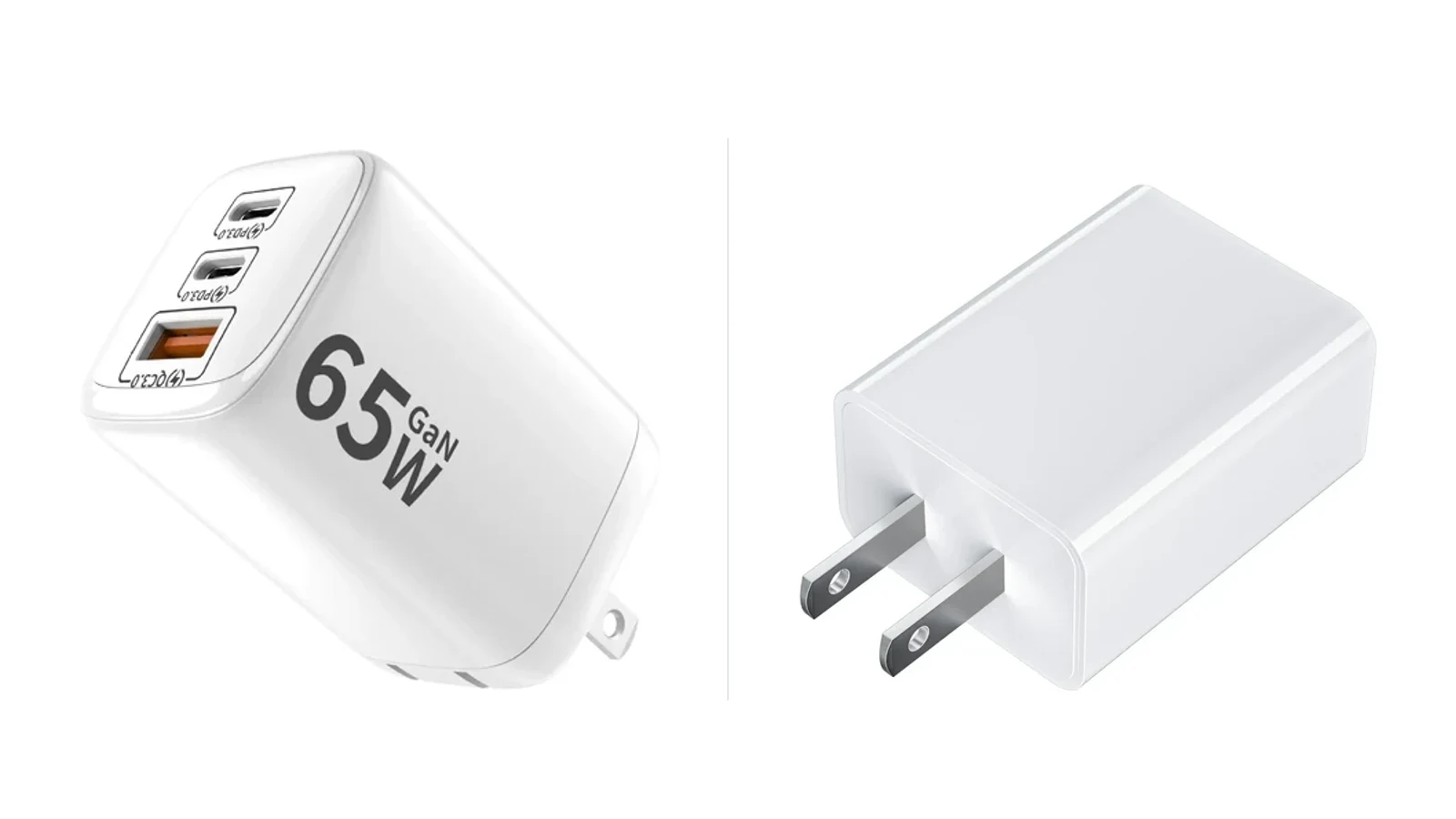
65W and 100W GaN chargers differ less in speed than in how much of a laptop's demand they can cover while also charging something else. A 65W unit charges most slim laptops at full rate and still splits a useful share to a phone; a 100W unit covers larger laptops but gives up more per-port power when several devices are connected. Choose by the devices your channel sells: 65W in 2C1A is the volume configuration for mixed phone, tablet and ultrabook buyers, while 100W earns its place where 16-inch laptops and multi-device desk setups are common.
Key takeaways
- Wattage is a budget shared across ports, not a per-port guarantee.
- Most slim laptops draw 45–65W; 65W covers them without paying for headroom that is rarely used.
- 100W is the ceiling of standard USB PD 3.0; beyond that requires PD 3.1 extended power range and matching cables.
- A 100W charger can still deliver only a fraction to a phone when a laptop is connected.
- Cable rating matters as much as the charger: a low-rated cable caps the whole chain.
The number on the box is a total, not a promise
A 65W charger with three ports is a 65W power supply with a distribution policy. Connect one device and it may receive the full 65W. Connect a laptop and a phone and the charger splits the budget according to a table the manufacturer defines — commonly something like 45W to the laptop and 20W to the phone, with variations by port and by negotiation.
This is the single most misunderstood point in charger merchandising. Customers read "65W" as "65W per port" and return the product when their laptop reports a lower charge rate with a phone also connected.
| Configuration | Typical use | What the customer experiences |
|---|---|---|
| 65W single port | One laptop or tablet | Full 65W available |
| 65W, laptop plus phone | Ultrabook and phone | Laptop near full rate, phone on a reduced share |
| 65W, three devices | Laptop, phone, earbuds | Laptop reduced, two small devices on low shares |
| 100W single port | Large laptop | Up to 100W if the laptop requests it and the cable supports it |
| 100W, laptop plus phone | Large laptop and phone | Laptop retains most of the budget, phone on a modest share |
Where 65W is genuinely enough
Most thin-and-light laptops ship with 45W to 65W adapters and will not draw more than that, whatever the charger offers. A 65W GaN unit covers them at full rate and, when a second device is added, still passes enough to keep a phone charging at a normal speed.
That makes 65W the natural volume SKU for channels selling to:
- Students and office buyers with 13–14 inch laptops
- Tablet users whose devices draw 20–45W
- Travel buyers who want one charger for a phone, a tablet and a small laptop
- Retail bundles where the charger is an accessory rather than the main purchase
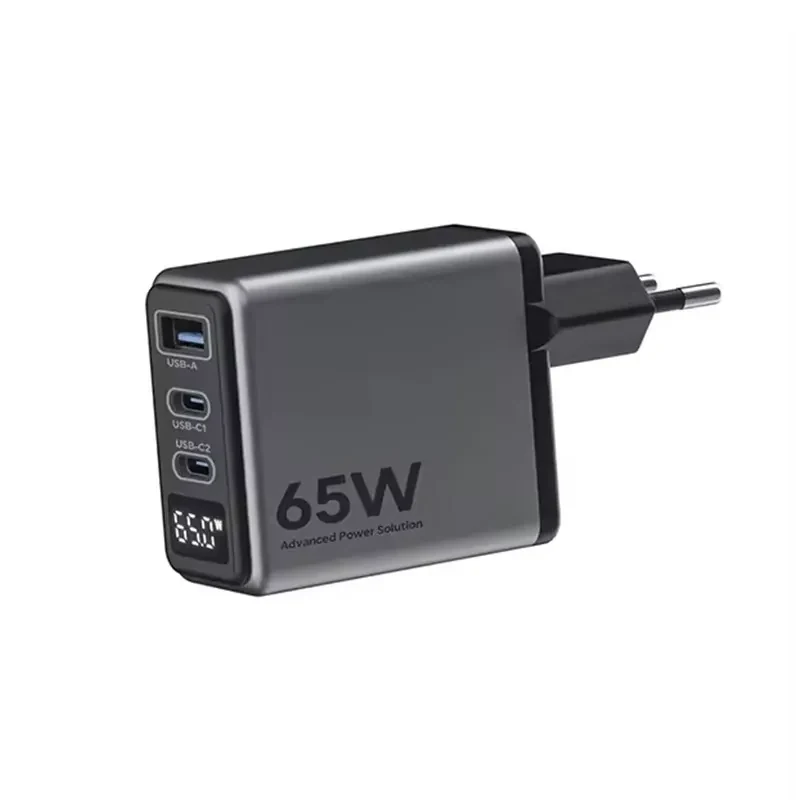
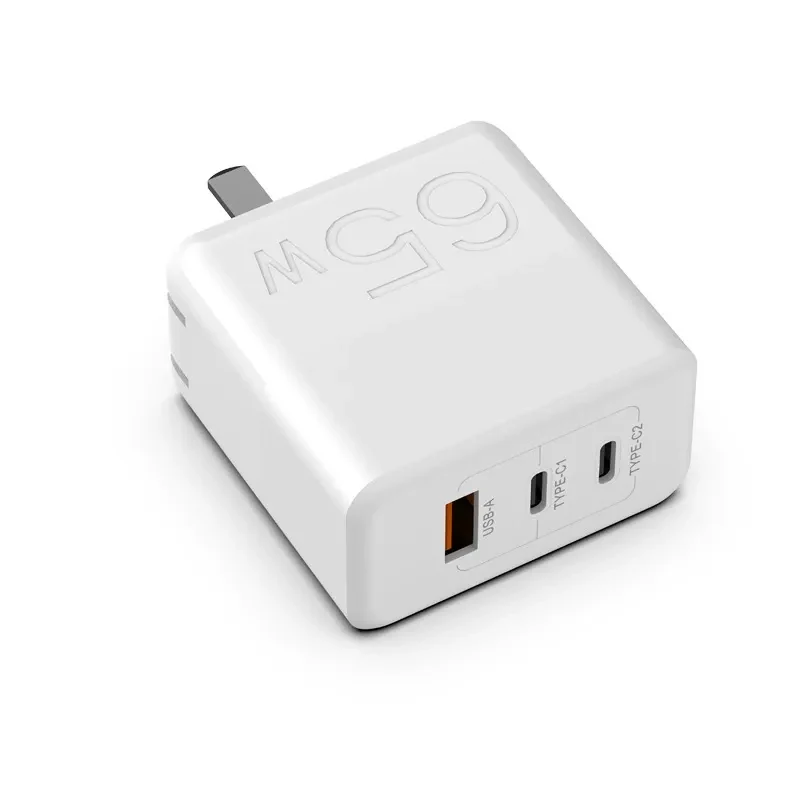
The 2C1A port mix — two USB-C and one USB-A — remains the most useful arrangement in this class, because it covers a laptop, a phone and a legacy cable without adapters.
Where 100W starts to make sense
100W matters when the device actually requests it: larger laptops with discrete graphics, some 16-inch models, and docking-style setups where the charger also feeds a hub or a monitor's power delivery.
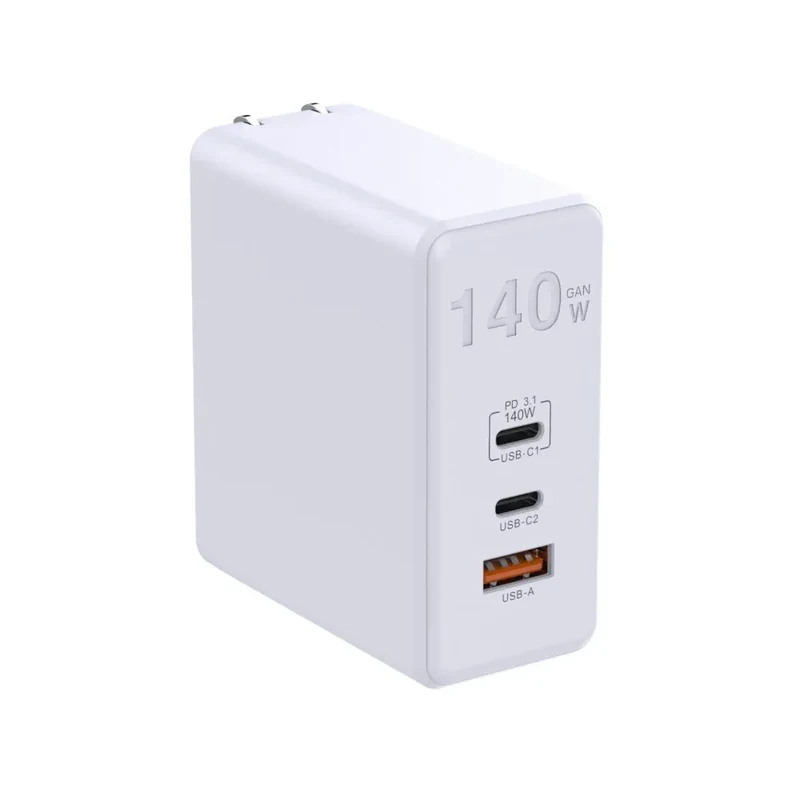
It is also the practical ceiling of standard USB PD 3.0, which defines a maximum of 100W over USB-C. Anything above that — 140W, 240W — requires PD 3.1 extended power range, an EPR-capable cable and a device that supports it. A 140W charger is therefore a specialist item, not a volume driver, until more devices request more than 100W.
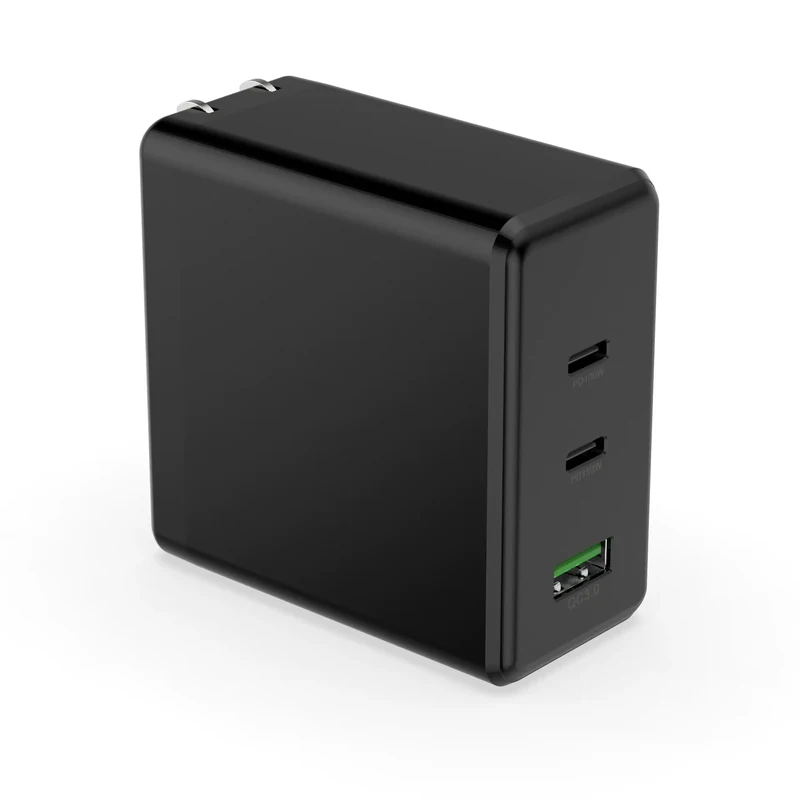
The trade-off at 100W is physical: larger thermal mass, often a single port or a port mix with a more aggressive sharing policy, and a higher price that a phone-only buyer will not pay.
The cable is part of the specification
A charger cannot deliver more than the cable allows. Cables rated for 3A cap the chain at around 60W at 20V; 100W delivery at 20V requires 5A, which requires an electronically marked cable. A customer who pairs a 100W charger with an unmarked cable will see a lower charge rate and conclude the charger is faulty.
For wholesale programmes, decide explicitly:
- Whether a cable is included, and at what rating
- Whether the included cable is marked for the current the charger can deliver
- How the packaging states cable capability, since this is a common return reason
Selling a 100W charger without a suitable cable transfers a support problem to the retailer.
Comparison table for range planning
| Dimension | 65W GaN 2C1A | 100W GaN |
|---|---|---|
| Laptop coverage | Slim and ultrabook at full rate | Larger laptops at or near full rate |
| Phone coverage when laptop connected | Moderate share | Modest share |
| Port count | Usually 3 | Usually 2–3 |
| Physical size | Small, travel friendly | Noticeably larger |
| Cable requirement | 3A cable adequate for most use | 5A marked cable for full output |
| Price position | Volume | Premium |
| Best channel | Travel, telco, general retail, bundles | Tech retail, pro/desk, laptop accessory |
A range that does not cannibalise itself
The common mistake is stocking both wattages in the same port configuration and letting them compete on shelf. A cleaner structure separates them by use case rather than by number:
- Travel SKU — 65W, compact, foldable pins, multi-port, positioned for bags and trips.
- Desk SKU — 100W or above, positioned for a fixed setup with a laptop and peripherals, often with a display or a stand.
- Entry SKU — 30W single port for phone-only buyers, priced to be an add-on.
That structure lets a customer self-select by situation instead of by spec sheet, and it keeps the 65W unit as the default recommendation.
Verification questions before ordering
- What is the power-sharing table across ports, and is it published in the manual?
- Which PD versions and fixed voltages are supported on each port?
- Does the charger support PPS, and over what range?
- What cable rating is required for full output, and is one included?
- What is the temperature behaviour at sustained full load, and is there a derating policy?
- Which certifications cover which plug variants?
This guide describes how multi-port chargers allocate power and what to verify in a specification. It does not publish test results for specific SKUs, supplier pricing or market forecasts. Power-sharing tables and supported protocols vary by model — request the manufacturer's port allocation table and confirm it against a physical sample before committing volume.
Frequently asked questions
Will a 100W charger charge my phone faster than a 65W one?
No. A phone negotiates the rate it supports, which is usually far below either figure. A 100W charger helps when a large laptop is connected, or when several devices need a share of a bigger budget. For a phone alone, a 30W charger often delivers the same result as a 100W unit.
Why does my laptop charge slowly when I plug in a phone as well?
Because the charger is dividing a fixed budget. The allocation table decides how much each port receives, and adding a device usually reduces the laptop's share. Check the published table before assuming a fault; if the behaviour is not documented, that is a specification gap worth raising with the supplier.
Is 65W enough for a 16-inch laptop?
Sometimes, but not reliably. Larger laptops often ship with 90W or 100W adapters and will charge slowly or report a low-power warning on 65W. Match the charger to the adapters your customers' devices ship with, which is the most reliable indicator of demand.
Do I need a special cable for 100W?
Yes, for full output. Delivering 100W at 20V requires 5A, which requires an electronically marked cable. Standard 3A cables cap the chain at roughly 60W. If you sell a 100W charger without a suitable cable, expect support tickets that describe a faulty charger rather than an inadequate cable.
Should I stock 140W or 240W units now?
Treat them as specialist items. They require PD 3.1 extended power range, matching cables and devices that request more than 100W, which is still a narrow set. Stock them for a specific buyer — large laptop and docking users — rather than as the default high-end SKU.
Ready to shortlist suppliers?
Send your SKU list, target quantities and destination markets. We confirm current specifications, MOQ tiers, certification files and carton data before any order.