GaN Charger vs Standard Charger: What Wholesale Buyers Should Stock
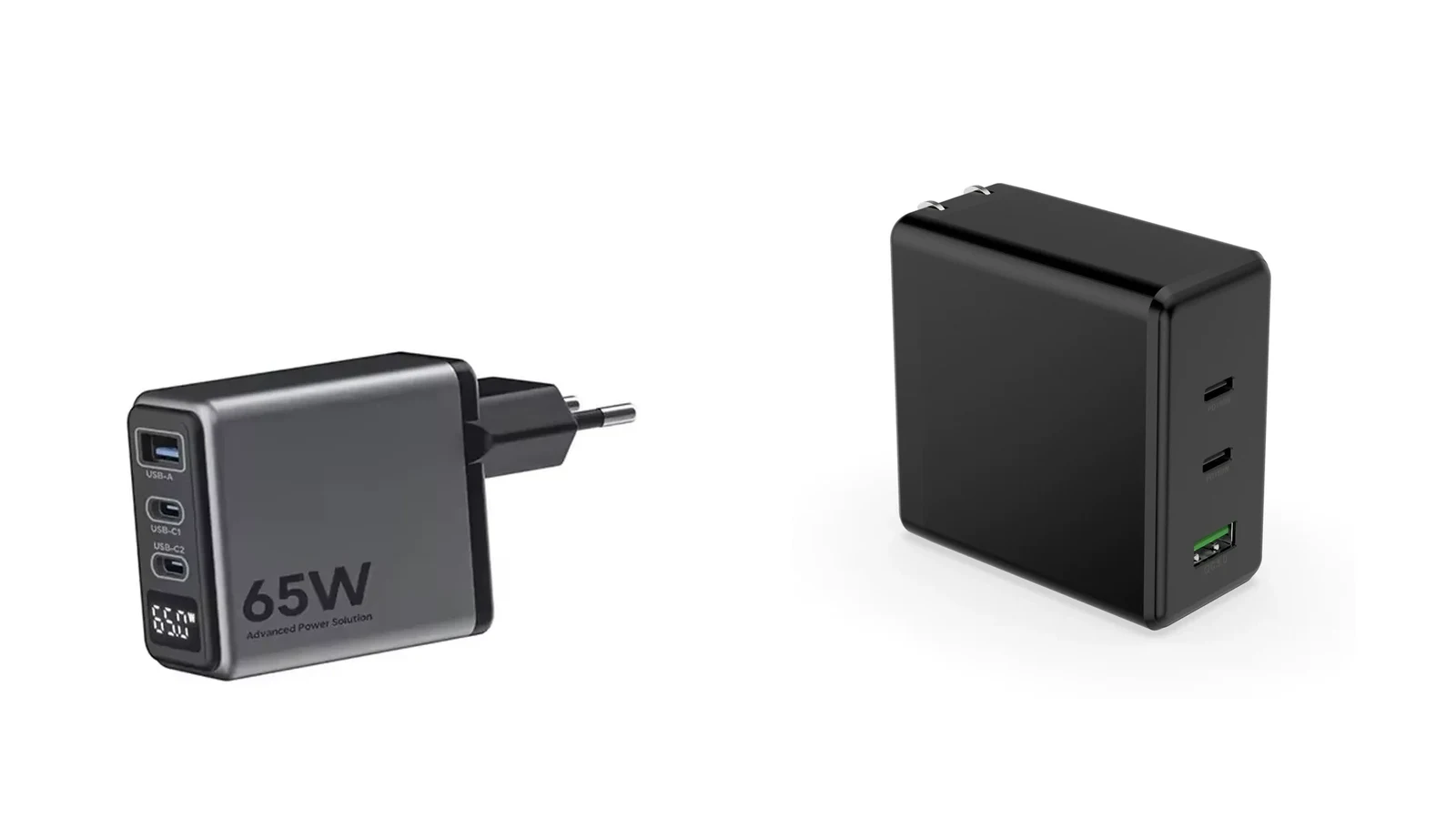
For most wholesale programmes, a 65 W GaN charger with two USB-C ports and one USB-A port covers the widest device base per unit of cost. GaN changes size and heat, not speed at the same output: a 30 W GaN unit is smaller, not faster. Decide the port mix and protocol support first, verify plug type and certification per market, then negotiate MOQ and packaging. This guide sets out the comparison dimensions and the checks behind them.
Key takeaways
- GaN is a switching-transistor material. Its buyer-visible benefit is a smaller, cooler housing at a given output, not extra power.
- A 65 W 2C1A configuration is the usual core SKU; 140 W desktop units are a specialist line, not a volume driver.
- Protocol support is the return-rate lever: PD version, PPS and QC determine whether phones charge at their expected rate.
- Each plug head needs its own approval. An interchangeable plug kit is not automatically compliant everywhere.
- Charger pricing moves with protocol chipset, port count, plug tooling, certification scope and packaging — not just wattage.
Where each configuration sells
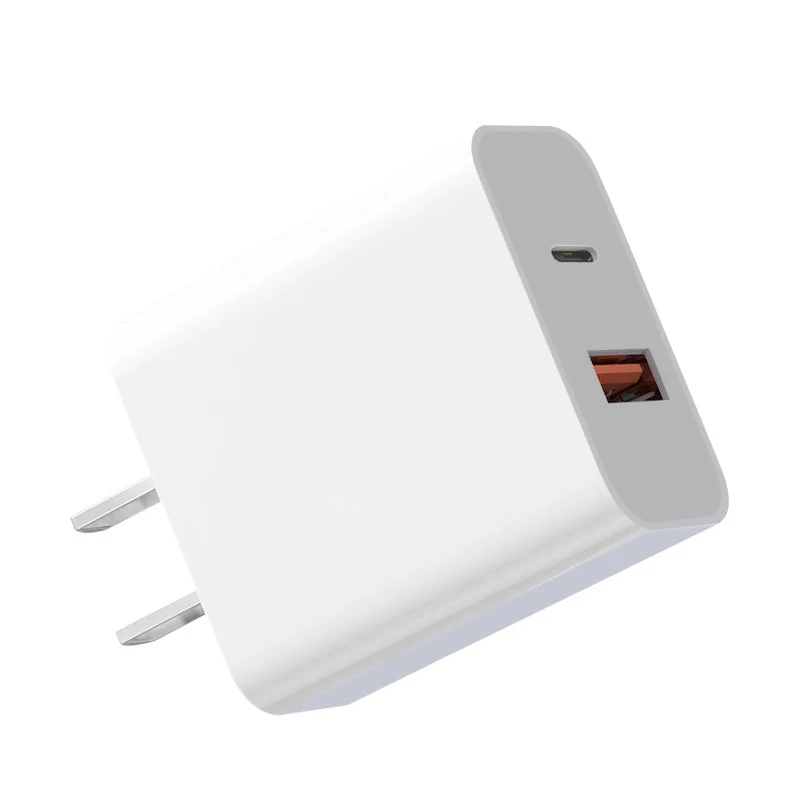
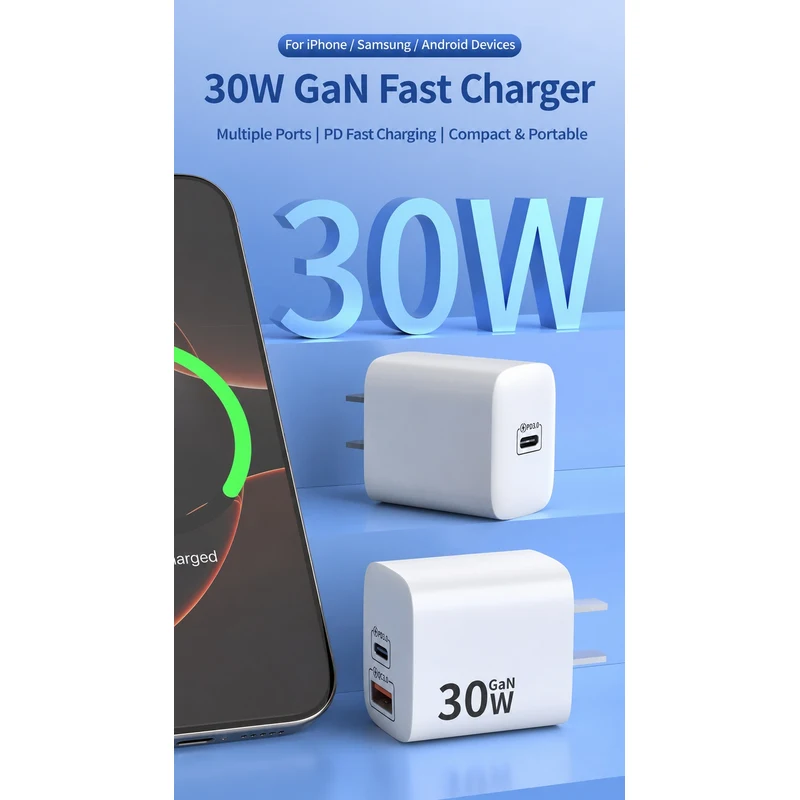
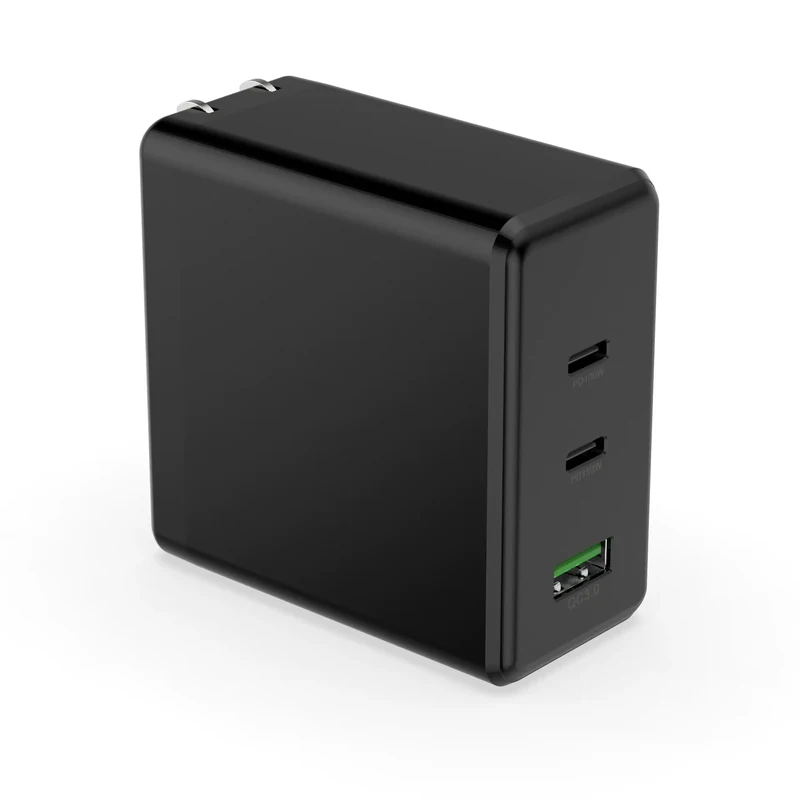
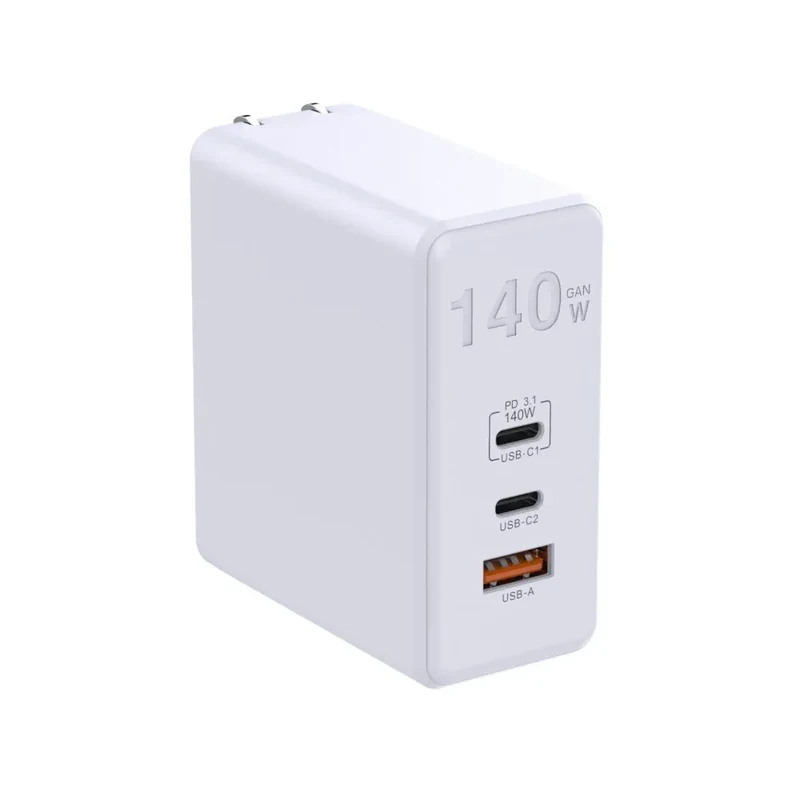
The same charger has different value in different channels. A single-port 30 W unit suits gift, hospitality and phone-accessory bundles where price dominates. A 65 W multi-port unit fits home-office and travel retail, where one charger replaces several. A 140 W desktop unit sells to laptop-replacement and work-from-home buyers, but at lower depth. Our Volt GaN 65W Charger and Volt GaN 140W Desktop Charger illustrate the two ends of that range in the chargers and wireless charging category.
What matters at wholesale is that the port mix and protocol list match the devices your channel actually sells — not the largest number on the box.
What GaN actually changes
GaN is short for gallium nitride, a wide-bandgap semiconductor used for the switching transistors inside a charger. Those transistors switch at higher frequency and waste less energy as heat than conventional silicon MOSFETs, so the same output can be built into a smaller housing with less thermal management.
The buyer-visible benefit is size and temperature, not "more power". A 30 W GaN charger is not faster than a 30 W silicon charger — it is smaller. Wattage is set by the power-supply design and the negotiated output, not by the transistor material. This distinction matters at wholesale because marketing copy that implies GaN alone increases charging speed creates a mismatch between expectation and measured behaviour, which shows up as returns.
| Buying dimension | GaN charger | Silicon charger | What it means for a wholesale line |
|---|---|---|---|
| Size at equal output | Typically smaller | Typically larger | Better shelf density and lower volumetric freight |
| Heat at equal output | Typically lower losses | Typically higher losses | Smaller housing is feasible; thermal design still matters |
| Charging speed at equal output | Same, if protocol and wattage match | Same, if protocol and wattage match | Do not market GaN as "faster" |
| Unit cost | Usually higher at low wattage | Usually lower | GaN pays off where size commands a price premium |
| Design maturity | Wide, but model-dependent | Very wide | Evaluate the specific model, not the material label |
How USB Power Delivery negotiation works
USB Power Delivery is the protocol that lets a charger and a device agree on voltage and current. In simplified terms, the charger advertises the power profiles it can supply over the USB-C configuration channel, and the device selects one. The USB-IF USB Power Delivery specification and the USB Type-C Cable and Connector Specification define the framework.
Three terms are worth separating because they are often mixed up on spec sheets:
- PD (Power Delivery) — the negotiation framework and the fixed voltage profiles a port can offer.
- PPS (Programmable Power Supply) — a PD feature allowing fine-grained voltage adjustment in small steps. Some Android fast-charge implementations rely on it; a charger that lists PD but omits PPS may charge those devices below their peak rate.
- EPR (Extended Power Range) — the higher-power extension associated with newer PD revisions, relevant above 100 W.
Quick Charge (QC) is a separate protocol family. A charger marketed as supporting "all fast charging" should list exactly which protocols and which versions, per port. Also check whether total wattage is shared: a "65 W" charger with three ports may deliver 65 W on one port but redistribute it when several devices are connected. Ask for the port-by-port allocation table.
Comparing the three common configurations
| Configuration | Typical use | Protocol support to require | Stock recommendation |
|---|---|---|---|
| 30 W single USB-C | Phone-only buyers, gift channels | PD with PPS where Android-heavy | Entry SKU, high volume, thin margin |
| 65 W 2C1A | Phone + tablet + accessory | PD 3.0 or later, PPS, QC support | Core SKU for most distributors |
| 140 W 3C1A desktop | Laptop replacement, work-from-home | Newer PD revision with EPR, per-port allocation table | Specialist SKU, lower depth |
Where wireless charging or multi-device docks belong in the assortment, treat them as adjacent SKUs rather than substitutes: the Volt Wireless Charging Pad 15W follows the Wireless Power Consortium Qi specifications, and the Volt 6-Port Charging Station serves a different "one desk, many devices" use case.
Protocol support is the return-rate lever
A charger that lists "PD" but does not support PPS will charge some Android flagships below their peak rate. Buyers notice. Check for the PD version, PPS support and QC version where the target market is Android-heavy, and confirm the negotiated wattage on a single port for Apple devices. Two chargers with the same headline wattage can behave differently with the same phone.
Ask for a per-port output table and, if possible, a short measurement with a USB power meter on the exact sample you will be buying. This is a request for evidence, not a claim that we have published test results.
Plug types and certification by market
Interchangeable plug kits are useful for distributors serving several markets, but each plug head needs its own approval. Do not assume a kit is compliant everywhere.
| Market | Plug and marking commonly checked | Primary source |
|---|---|---|
| US / Canada | NEMA 1-15P folding plug; FCC Part 15 obligations for switching supplies; UL or ETL listing often requested by retail chains | FCC Equipment Authorization, UL |
| European Union | CEE 7/16 Europlug; Low Voltage Directive, EMC Directive and RoHS under CE | LVD 2014/35/EU, EMC 2014/30/EU, RoHS |
| United Kingdom | BS 1363 with fuse; UKCA route | GOV.UK UKCA guidance |
| Australia / New Zealand | AS/NZS 3112; RCM / Electrical Equipment Safety System | EESS |
| Radio-equipment variants | Where a wireless radio is present, RED applies instead of / alongside LVD-EMC | RED 2014/53/EU |
Certification scope is model-specific. A certificate for a 65 W unit does not automatically cover a 140 W unit from the same factory, and a report for one plug head does not cover another.
MOQ and pricing factors for chargers
Charger unit price is driven by more than wattage. Use the checklist below when comparing two quotations that look far apart.
- Protocol chipset and PD version — higher-version, multi-protocol chipsets cost more; ask which protocols are enabled on which port.
- Port count and shared power budget — more ports mean more components and a larger power stage; require a per-port allocation table.
- Plug tooling and certification scope — each plug variant adds tooling and approval cost; interchangeable kits do not remove this.
- Housing and thermal design — GaN enables smaller housings but still needs careful thermal layout; compare size at equal output and equal load.
- Included cable and retail packaging — cable specification and box artwork can shift unit cost materially; confirm whether a cable is in the quoted price.
- Order tier and branding — higher tiers lower unit cost, while custom printing adds setup; confirm sample credit and tier boundaries in writing.
Sample-batch inspection checklist
Use this as an inspection plan for the exact sample you receive. It is a checklist, not a published test report.
- Measure output on each port with a USB power meter, both single-port and multi-port; check for the headline wattage being available on only one port.
- Run a sustained load and record housing temperature and any audible noise; look for hot spots, coil whine or thermal throttling.
- Verify protocol behaviour — PPS / QC support and version — with a compatible analyser or device; a "PD" claim without PPS is a common mismatch.
- Check plug and housing markings (model, input range, output table, compliance marks) against the certificate file.
- Check cable and connector fit, cable specification and strain relief; a loose connector or under-rated bundled cable is a frequent defect.
- Check packaging and artwork — retail box, warranty statement, barcode and language version — for missing importer details or artwork mismatch.
- Check safety documentation — certificate file, test report references and declaration of conformity — for scope covering a different model or plug head.
Packaging and after-sales
Chargers are a low-attention purchase: buyers pick on price and brand trust. That makes the retail box, the cable included and the warranty statement more important than an extra line in a spec table. A clear replacement policy stated on the box reduces pre-sales friction more than a marginal wattage increase. Agree in writing who pays return freight for defective units and how a batch fault is handled — the answer is part of the real unit cost.
Building a charger line, not a single SKU
A charger line works better as a small, coherent set: one core multi-port GaN unit, one entry single-port unit, one high-output desktop unit, then complementary power banks such as the Volt Power Bank 10000mAh and cables and connectivity accessories. Bundling across those categories raises average order value without adding a new supplier relationship, and it is the natural next step when you consolidate a mixed shipment.
This article explains technology and buying criteria. It does not contain verified sales data, market statistics, customer results or product test results, and it does not certify any product for any market. Specifications shown in our catalog are demo records. Confirm the PD version, PPS support, per-port output, plug approval, certification scope, MOQ and pricing with the supplier and your importer of record before ordering.
Sources and standards
- USB-IF — USB Power Delivery
- USB-IF — USB Type-C Cable and Connector Specification
- Wireless Power Consortium — Qi standards
- EUR-Lex — Low Voltage Directive 2014/35/EU
- EUR-Lex — EMC Directive 2014/30/EU
- EUR-Lex — RoHS Directive 2011/65/EU
- US FCC — Equipment Authorization
- GOV.UK — Using the UKCA marking
- EESS — Australian electrical equipment safety system
Frequently Asked Questions
Is a GaN charger faster than a silicon charger with the same wattage?
No. At the same output and the same negotiated protocol, both deliver the same power. GaN transistors switch more efficiently, which allows a smaller and often cooler housing. Charging speed is determined by wattage, protocol support and the device, not by the transistor material.
What does PPS mean and why does it matter for wholesale?
PPS (Programmable Power Supply) is a USB Power Delivery feature that allows fine-grained voltage adjustment. Some Android fast-charge implementations depend on it, so a charger listing PD without PPS may charge those phones below their peak rate. Confirm it per port, not just on the box.
Which charger configuration should a distributor stock first?
For most channels, a 65 W charger with two USB-C ports and one USB-A port covers the widest device base. Add a low-cost single-port entry SKU and a higher-output desktop unit for laptop-heavy buyers, then expand based on what actually sells.
Does one CE certificate cover every charger plug variant?
No. Certification scope is model- and variant-specific. Different plug heads, different power stages and different model numbers generally need their own evaluation. Ask for the declaration and test documentation that names the exact SKU and plug type you are importing.
Can I use one interchangeable plug kit for several markets?
Physically yes, but each plug head needs its own approval and the correct markings. An interchangeable kit is not automatically compliant everywhere. Confirm the plug variant per destination and keep the documentation aligned with the shipment.
What is the typical MOQ for wholesale GaN chargers?
MOQ varies with model, plug type, certification scope, packaging and branding. Stock configurations usually carry lower minimums; custom plug tooling, private-label packaging or custom firmware raise them. Confirm the MOQ and tier boundaries for each SKU in writing.
How do I check a sample charger before a bulk order?
Measure output on each port with a USB power meter, verify protocol support and version, run a sustained load and record housing temperature, and confirm that markings on the housing match the certification documents. Do this on the exact sample, then keep the report with the order file.
Are the specifications in this article verified test results?
No. This article explains technology and evaluation criteria. It does not publish product test results, market statistics or customer outcomes. Confirm all specifications, certifications, MOQ and pricing against the supplier's current datasheet and compliance file.
Conclusion: specify the protocol, then the price
Most charger returns trace back to a mismatch between what the box claims and what the port negotiates. Fix the configuration and protocol list first, verify the compliance file for the exact model and plug, and only then compare unit prices across suppliers.
Browse the chargers and wireless charging category or request a bulk quote with your target wattage, port mix, plug types and destination markets.
Ready to shortlist suppliers?
Send your SKU list, target quantities and destination markets. We confirm current specifications, MOQ tiers, certification files and carton data before any order.