Multi-SKU Consolidation from Shenzhen: How to Keep One Container Profitable
Consolidation puts several product lines from several factories into one shipment under one set of export documents, so you pay one booking, one customs entry and one delivery leg. Profitability depends on five decisions: plan by carton, not by unit; choose where consolidation happens; inspect before cartons are sealed; keep the invoice, packing list and HS codes consistent; and leave room for a repeat order. This guide sets out the workflow and the documents that must match.
Key takeaways
- Plan the container by carton, not by unit. Bulky goods fill volume long before small goods fill it.
- Consolidation removes duplicate booking, customs and last-mile legs; it does not remove per-SKU compliance work.
- The commercial invoice, packing list and HS codes must describe the same goods in the same quantities.
- EXW and FOB are not interchangeable. Incoterms decide who owns cost and risk at each handover point.
- The cheapest inspection is the one done at the consolidation point, before cartons are sealed.
Why does a mixed order need a coordination layer?
A single-SKU order from one factory is simple. Twenty SKUs from eight factories is where cost, delay and damage accumulate: every factory has its own carton data, production finish date, invoice format and compliance file, and each mismatch has to be reconciled before the container is sealed.
Consolidation removes duplicate handovers, but it does not make the underlying requirements disappear. Each SKU still needs its own correct classification, its own compliance file and its own packaging approval. A consolidated container with one misdeclared line is a container-sized delay, not a one-line delay. This is why importers often work with a sourcing partner rather than ten separate factories: the partner's job is the coordination layer, not just the freight booking.
What does consolidation actually mean?
A few terms are worth fixing before planning, because they are used loosely in quotations:
- Consolidation warehouse — a facility, often near the export port, where goods from several factories are received, checked, re-packed and loaded into one container.
- FCL / LCL — full container load versus less-than-container load. Consolidation is how a multi-factory LCL-style order becomes an efficient FCL shipment.
- Master carton — the outer carton that appears on the packing list. Carton count, not unit count, is what the warehouse and the carrier work with.
- HS code — the harmonised classification used for duties and declarations; the framework is published by the World Customs Organization.
- Incoterms — the ICC rules that define who pays and who carries risk at each handover.
Step 1: Plan cartons before you plan quantities
Ask each supplier for carton dimensions, gross weight and units per carton. Then model the container by carton, not by unit. A 40HQ fills faster with bulky items like speakers and neck fans than with earbuds.
- Compute total cartons: units divided by units-per-carton, rounded up.
- Group by category so that mixed cartons stay sensible for your warehouse.
- Reserve volume for packaging tolerance and pallet height limits.
- Recalculate carton gross weight after promotional packaging is added; extra print and inserts change both weight and carton count.
Collect these inputs from each supplier before you model the container:
- Carton dimensions and gross weight — from each supplier's packing data; drives the volume and weight loading plan.
- Units per carton — from each supplier's packing data; drives carton count and order-quantity rounding.
- HS code per SKU — from your customs broker; drives declaration lines and duty treatment.
- Destination and delivery terms — from your purchase order and Incoterm; define who pays each leg and who carries risk.
- Battery / radio status per SKU — from the supplier compliance file; drives additional documentation and carrier acceptance.
Step 2: Decide where consolidation happens
| Option | Best for | Watch out for |
|---|---|---|
| Suppliers ship to a Shenzhen consolidation warehouse | Multi-factory orders | Inbound handling fees, receiving checks and inspection time |
| One supplier acts as consolidator | Small, trust-based orders | Mixed liability if something is short-shipped |
| Direct-to-port loading | Large single-factory orders | No chance to inspect or re-pack before loading |
| Third-party logistics provider with receiving QC | Buyers who want an independent count | Additional fee; agree the inspection scope in writing |
Whichever model you choose, fix one thing in writing: who is liable for a shortage discovered at the consolidation point. If goods move directly from a factory truck into a sealed container, there is no clean point at which to attribute a missing carton.
Which cost lines does consolidation change?
Consolidation does not change the unit price of any SKU. It changes the number of times you pay for the surrounding logistics. The list below is qualitative by design — actual rates depend on lane, season, carrier and volume and must be quoted by your forwarder.
- Freight booking and documentation — one booking and one document set instead of several; confirm whether consolidation fees offset the saving.
- Customs entry and clearance — one entry for the consolidated shipment; every SKU still needs a correct HS line.
- Inbound handling at the warehouse — an added cost, but it replaces multiple factory-level dispatches; confirm receiving, counting and re-packing fees.
- Last-mile delivery — one delivery leg; confirm appointment and unloading requirements.
- Inspection — one visit at the consolidation point; confirm the scope, sampling plan and who signs the report.
- Inventory risk — more SKUs in one shipment means more capital at once; consider whether a smaller first shipment is safer.
Step 3: Inspect at the consolidation point
The cheapest inspection is the one done before cartons are closed. A basic check covers quantity, model and colour mix, visible cosmetic defects, plug type, and whether retail boxes match the artwork you approved.
| Inspection item | What to check | Common issues |
|---|---|---|
| Carton count and markings | Count against the packing list, check ship-to marks | Short-shipped cartons, mismatched carton labels |
| Model and colour mix | Open a defined sample of cartons | Wrong colour ratio, wrong model in a mixed carton |
| Cosmetic finish | Units under even light | Scratches, print misalignment, damaged retail boxes |
| Plug type and markings | Against the destination-market order | Wrong plug head for the market |
| Compliance marks and artwork | Against the approved file | Markings that do not match the certificate |
| Battery / radio documentation | UN 38.3, MSDS, certificate file per SKU | Missing file for one line in a mixed shipment |
| Packaging integrity | Drop-sensitive items, inner protection | Crushed boxes, insufficient inner padding |
Step 4: Documents that must match
Commercial invoice, packing list and the HS codes on both must agree with what is loaded. Battery-containing products need UN 38.3 summaries and, depending on the carrier, safety data sheets; chargers need the compliance file for the destination market. Any mismatch between invoice and carton markings is a customs delay waiting to happen.
| Document | What must agree | Risk if it does not |
|---|---|---|
| Commercial invoice | SKU description, quantity, unit value, totals | Customs valuation query, held shipment |
| Packing list | Carton count, carton contents, gross/net weight | Physical count mismatch at destination |
| HS classification | Correct code per SKU, consistent across documents | Duty reassessment or compliance review |
| Certificate / declaration files | Exact model and plug variant per SKU | Goods refused or relabelling required |
| Battery / dangerous-goods documents | UN 38.3, MSDS, carrier acceptance per SKU | Carrier refuses the line or the whole container |
| Bill of lading / booking | Shipper, consignee, carton count, description | Release delays at destination |
What extra paperwork applies to battery and radio products?
Most consumer-electronics assortments include at least one lithium-battery or radio SKU. Those lines need more than a packing list. The UNECE Manual of Tests and Criteria contains the UN 38.3 lithium-battery test section that carriers commonly reference, while radio products sold into the EU fall under the Radio Equipment Directive and into the US under FCC equipment authorization. Carrier-specific rules vary, so confirm acceptance with the forwarder before the goods reach the warehouse.
Practically, this means a mixed container is only as clean as its most documentation-heavy line. If one power bank SKU lacks a test summary, the whole booking can be held. Group battery goods together in the packing list so the paperwork is easy to reconcile.
Why are EXW and FOB not interchangeable?
Suppliers frequently quote different Incoterms, which makes two apparently similar prices impossible to compare. Under the ICC Incoterms rules, the chosen term defines who arranges and pays for each leg and where risk transfers. Under EXW the buyer takes responsibility essentially at the factory gate; under FOB the seller is responsible for getting the goods on board. Between those two sit inland transport, export clearance and terminal handling — real costs that do not appear in an EXW unit price.
Before comparing quotations, normalise them to the same term and the same destination. Also confirm that every supplier in the consolidated order uses the same term, or you will have several different handover points in one shipment and no single party accountable for the gap.
Step 5: Leave room for a repeat order
The first consolidated shipment tells you which SKUs actually move. Keep a portion of the container value unallocated so you can add a fast-moving SKU on the second order without renegotiating freight. Record sell-through by SKU, not just by category — in a mixed container the slow line is often the bulky one that consumed the volume.
Which mistakes should you avoid?
- Mixing incompatible HS codes in one carton to "save space" — it complicates declaration and counting.
- Forgetting that promotional packaging changes carton weight and carton count.
- Booking freight before the inspection report is in hand.
- Assuming all suppliers quote the same Incoterm; EXW and FOB differ by more than the freight line.
- Sending the compliance file for a sibling model instead of the exact SKU being shipped.
- Letting one supplier act as consolidator without agreeing who is liable for short-shipped cartons.
What does a practical first-order SKU mix look like?
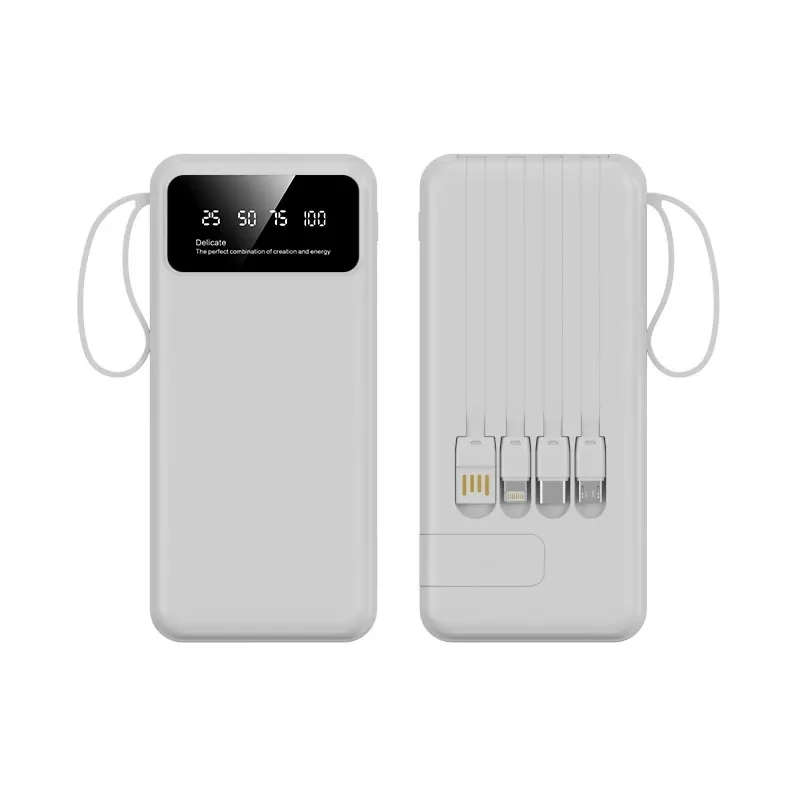
A first mixed order works best when it spans different volumes and different price points rather than twenty variants of one product. For example, compact earbuds alongside a bulky Bluetooth speaker, a neck fan and a power bank gives you data on volume efficiency, price elasticity and documentation load in one shipment. Note that the battery lines are the ones that set the paperwork schedule.
Think in four roles rather than four arbitrary SKUs:
- High-volume, low-price entry line — compact audio accessories; needs a correct HS line and retail artwork approval.
- Volume-filling seasonal line — fans and cooling devices; needs a carton volume plan and battery documentation where applicable.
- Higher-value anchor line — chargers and power banks; needs UN 38.3, market-specific certification and the right plug variant.
- Gift / bundle line — speakers and mixed kits; needs mixed-carton rules and packaging tolerance.
This guide describes a sourcing and documentation workflow. It contains no verified freight rates, container volumes, duty rates, market statistics, customer results or case studies, and it is not customs or legal advice. Product records in our catalog are demo data. Confirm classification, documentation, Incoterms, carrier rules and all charges with your forwarder, customs broker and suppliers for your specific shipment.
Sources and standards
- ICC — Incoterms rules
- World Customs Organization — Harmonized System nomenclature
- UNECE — UN Manual of Tests and Criteria (UN 38.3)
- EUR-Lex — Radio Equipment Directive 2014/53/EU
- US FCC — Equipment Authorization
- WTO — tariff and trade information
Frequently Asked Questions
What is multi-SKU consolidation in practice?
It is receiving goods from several factories at one warehouse, checking and re-packing them, and loading them into a single shipment under one set of export documents. The saving comes from paying for one booking, one customs entry and one delivery leg instead of one per supplier.
Does consolidation reduce customs duties?
No. Duties follow the classification, value and origin of each SKU. Consolidation reduces the number of bookings and entries, not the duty treatment of individual goods. Every line still needs a correct HS code.
Which Incoterm should I use for a consolidated order?
There is no universal best term. Choose one and require every supplier to quote on it, so you can compare prices and have a single clear point where risk transfers. EXW and FOB differ substantially in who pays inland transport and export clearance.
What documents must match before booking?
The commercial invoice, packing list and HS codes must describe the same SKUs, quantities and weights. Battery lines additionally need UN 38.3 summaries and any carrier-required safety documentation, and certified products need the file for the exact model and plug variant.
Can battery products and ordinary accessories share one container?
Commonly yes, but the battery lines set the documentation and carrier-acceptance requirements. Group them clearly on the packing list and confirm the carrier's rules before the goods arrive at the consolidation warehouse.
When should inspection happen?
At the consolidation point, before cartons are sealed and before freight is booked. It is the last moment when a shortage, wrong colour mix or artwork error can be corrected without unpacking a sealed container.
How do I decide how much of the first container to leave unallocated?
Base it on how much uncertainty you have about which SKUs will sell, not on a fixed percentage. Keep enough flexibility to repeat a fast-moving line on the second order, and track sell-through by SKU so bulky slow movers are easy to identify.
Are the figures in this guide verified freight or duty rates?
No. This guide contains no verified freight rates, duty rates, container volumes or market statistics. It describes a workflow and the documents that must agree. Confirm all charges and classifications with your forwarder and customs broker.
Why is consolidation a coordination problem?
The hard part of a mixed container is not the freight — it is getting twenty SKUs, several factories and several compliance files to describe the same shipment. Fix the carton data, the Incoterm, the HS lines and the inspection point before you compare freight quotes, and the cost saving follows.
Browse the full product catalog to build a shortlist, or send a SKU list and target quantities for tiered EXW pricing and carton data. For product-level evaluation criteria, see our AI glasses supplier checklist and GaN charger buying guide.
Ready to shortlist suppliers?
Send your SKU list, target quantities and destination markets. We confirm current specifications, MOQ tiers, certification files and carton data before any order.